27 February 2022

I thought we were considered GUESTS, not thieves!

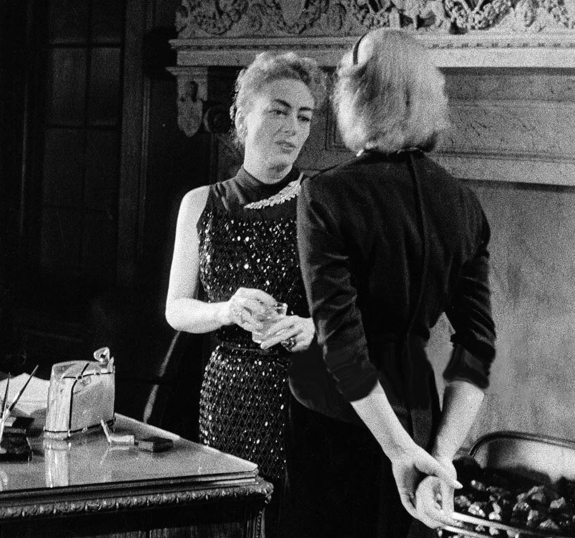
The luxurious Savoy Hotel in London was home to many classic Hollywood stars, including Marlene Dietrich. Dietrich loved the Savoy and lived at the hotel on and off throughout her career for extended periods of time. Her good relationship with the hotel abruptly ended in 1975, however, after she had been accused of stealing the hotel's cutlery. While the actress was indignant at being accused (see the letter below), according to a 2011 article in the Daily Mail she did have a habit of stealing cutlery from the Savoy as well as silver salt and pepper pots delivered to her suite via room service. In her book Marlene Dietrich: The Life (1992), Maria Riva confirmed that her mother had kleptomaniac habits. Dietrich used to nick the clothes which she wore for her various film roles, said Riva, and she also took gloves, scarves, handbags and hats.
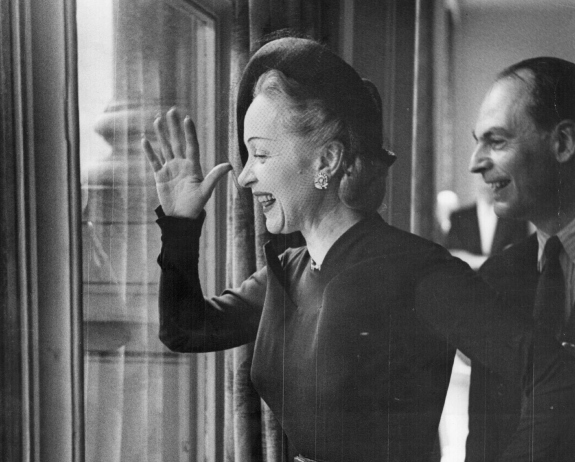
July 1949, Marlene Dietrich at the Savoy in London, waving to fans outside. Dietrich was in London for the shooting of Hitchcock's Stage Fright (1950).

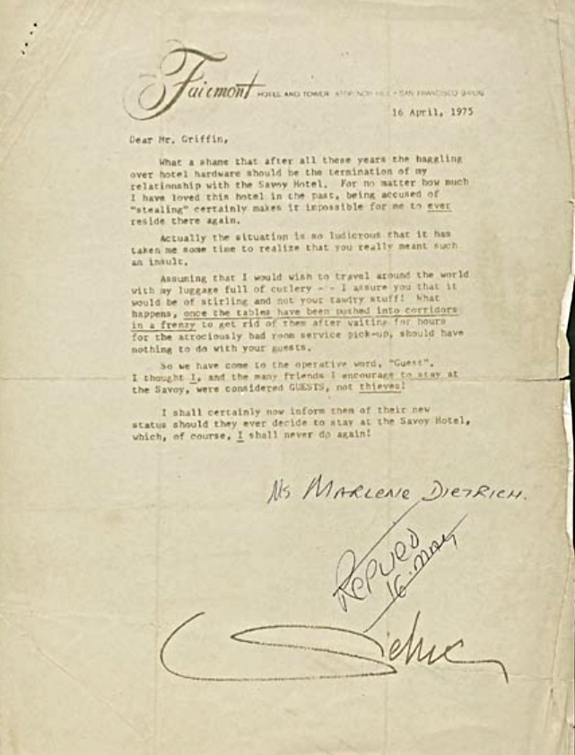
This is Marlene Dietrich's letter to the manager of the Savoy Hotel, written on 16 April 1975. I don't know what the hotel's reaction was, but apparently a reply was sent to Dietrich a month later.
Source: Gotta Have Rock and Roll

Transcript:

16 April 1975

Dear Mr. Griffin,

What a shame that after all these years the haggling over hotel hardware should be the termination of my relationship with the Savoy Hotel. For no matter how much I have loved this hotel in the past, being accused of "stealing" certainly makes it impossible for me to ever reside there again.

Actually the situation is so ludicrous that it has taken me some time to realize that you really meant such an insult.

Assuming that I would wish to travel around the world with my luggage full of cutlery — I assure you that it would be of stirling and not your tawdry stuff! What happens, once the tables have been pushed into corridors in a frenzy to get rid of them after waiting for hours for the atrociously bad room service pick-up, should have nothing to do with your guests.

So we have come to the operative word, "Guest". I thought I, and the many friends I encourage to stay at the Savoy, were considered GUESTS, not thieves!

I shall certainly now inform them of their new status should they ever decide to stay at the Savoy Hotel, which, of course, I shall never do again!

Ms Marlene Dietrich
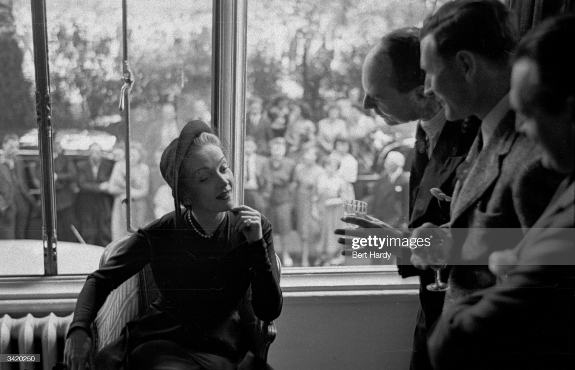
Dietrich talking to the press at the Savoy in July 1949


20 February 2022

Remembering Michael Curtiz

Born in Hungary as Manó Kertész Kaminer, director Michael Curtiz arrived in Hollywood in 1926 at age 39. Having already directed numerous films in Europe, Curtiz was signed to a contract by Warner Bros, the studio where he would make nearly all of his Hollywood films. While Curtiz didn't have a signature style like some of his peers (like Alfred Hitchcock or Frank Capra), he was a versatile director who could handle a variety of genres, including adventure, western, musical, drama, comedy and film noir. A lot of films that are now considered classics were directed by Curtiz, among them The Adventures of Robin Hood (1938), Casablanca (1942), Yankee Doodle Dandy (1942), Mildred Pierce (1945) and White Christmas (1954).

Curtiz was a workaholic, working long hours without pausing for lunch and dismissing actors who ate lunch as "lunch bums" (which led Peter Lorre to remark: "Curtiz eats pictures and excretes pictures"). A lot of actors as well as crew members found the director very difficult to work with. Biographer Alan Rode said that Curtiz's "demonic work ethic approached savagery" and that the working conditions on his sets had contributed to the founding of the Screen Actors Guild. As mentioned in this post, Bette Davis hated working with Curtiz. Among the actors who also had problems with the director were Errol Flynn, Humphrey Bogart and James Cagney, and the latter once said: "Mike was a pompous bastard who didn’t know how to treat actors, but he sure as hell knew how to treat a camera"

Struggling with the English language, Curtiz was known for his use of malapropisms. For example, a well-known anecdote is that Curtiz had asked for a "poodle" on the set of Casablanca; some time later the prop master brought him a little dog, not realising Curtiz had meant a "puddle" (of water),  not a "poodle".

Seen below are three letters from actresses who remember what is was like to work with Curtiz. The letters, all written in 1975, are addressed to Curtiz's daughter Candace Curtiz who was working on a book about her famous father. (I couldn't find any information regarding the book, so I guess it was never published.)

The first letter is from Olivia de Havilland who had quite a hard time with Curtiz, finding him "exigent, emotional, and even harsh". She was directed by him nine times, i.e. in Captain Blood (1935), The Charge of the Light Brigade (1936), Gold Is Where You Find It (1938), The Adventures of Robin Hood (1938), Four's a Crowd (1938), Dodge City (1939), The Private Lives of Elizabeth and Essex (1939), Santa Fe Trail (1940) and The Proud Rebel (1958). 

Not all actors found Curtiz difficult to work with, however. Claude Rains, for example, whom Curtiz had directed in ten films, got along with the director quite well. And there were others, including Ingrid Bergman and Rosalind Russell, who said they enjoyed working with the man. Bergman, who was directed by Curtiz in Casablanca (1942), and Russell, who worked with him on Roughly Speaking (1945), talk about their experiences in the second and third letter of this post, written on resp. 5 February 1975 and 22 August 1975.

On the set of Gold Is Where You Find It with Olivia de Havilland, George Brent and Mike Curtiz.


(The image on the left only shows the back of Ingrid's letter.)

I belong to the people who loved your father. He was extremely nice to me during the shooting of “Casablanca”. He was under such stress because the script was written day by day. All his actors were nervous not knowing what was going to happen, all of them asking for their dialogue. He sat mostly by himself in deep thoughts, while the lights were being changed. He was very impatient and couldn’t stand people that worked slowly. How wonderful, if he had known he was making a masterpiece, a classic that would be loved for generations! I never met your father outside of work, so I really only know him from the set. I think Hal Wallis, the producer and still here in Hollywood, could help you. They fought over the story every lunch hour!! 

I wish you best of luck —

Ingrid Bergman 

Humphrey Bogart, Ingrid Bergman and Mike Curtiz on the set of Casablanca.


Transcript:

Dear Miss Curtiz:

Forgive my not answering your letter. It was because I really had nothing to offer your book of great value.

I worked for your father but he did not use the "bon mots" many others said he did. He was hardworking + thorough, full of enthusiasm.

I enjoyed working with him + felt he put a good deal of his own unique energy on to the film he was making.

Good luck with your book about a splendid filmmaker!

Rosalind Russell

Mike Curtiz  and Rosalind Russell on the set of Roughly Speaking.


Source of all letters: One Of A Kind Collectibles Auctions

13 February 2022

I'm fed up with being interviewed

In March 1957 on the television show Caesar's Hour, Joan Crawford conducted a short interview with fellow actress Ingrid Bergman after presenting her with the Look Magazine Award. The award was to honour Ingrid as Best Actress of the Year for her performance in Anastasia (1956). While the interview lasts only a few minutes, it's really nice to see these two actresses together, Joan being her glamorous self and Ingrid natural and graceful as always. Here it is:

During their careers Joan and Ingrid never played in a film together, although they did play the same role of a disfigured woman in A Woman's Face, Ingrid in the original Swedish film from 1938 and Joan in the 1941 Hollywood remake. Also, they were contenders for the Best Actress Oscar in 1946, Joan being nominated for Mildred Pierce and Ingrid for The Bells of St. Mary's. (Joan eventually won but, convinced that Ingrid would win, she had stayed at home during the Oscar ceremony, feigning pneumonia.) While I don't think the women were friends, they obviously admired and respected each other and occasionally sent each other letters. 

Below is some of Ingrid's correspondence to Joan. First up is a 1946 notecard, congratulating Joan on her Oscar for Mildred Pierce (written the day after the Oscar ceremony). 


March 8- 46

Dear Joan —

My very sincere congratulations!

Ingrid Bergman


Next is a letter (shown in part) from 22 April 1969, in which Ingrid tells Joan that she is sorry to have missed her at the Oscars, held the week before. At the time Ingrid was filming A Walk in the Spring Rain (1970) and had just finished Cactus Flower (1969).

Source: Heritage Auctions

Transcript:

I am sorry I didn't see you at the Oscar affair except a second on the monitor backstage. Hope you are well and happy (you looked marvelous!) and all is well with your children. Mine came for a brief visit over Easter vacation. It's too bad my two pictures are so close together. I had no time to go home.
All my warmest wishes and love,
Ingrid


Finally, this letter was written in May 1975 and apparently Ingrid had agreed to do an interview with a friend of Joan's but decided not to go through with it, fed up with being interviewed. (By the looks of it, she didn't mind being interviewed by Joan years earlier!)

Source: icollector.com


Transcript:

Dear Joan —

Sorry, but I just couldn't see your friend for an interview. I have been so pressed for time and am also fed up with being interviewed. 
I am going home tomorrow for a rest and I send you my warmest wishes —
Ingrid

May 13- 75

6 February 2022

To credit or not to credit

A month after filming on Torn Curtain (1966) had ended, Alfred Hitchcock received a note from a Universal executive, asking him to include the name of set decorator John McCarthy in the film's credits. Baffled by the request, Hitch next sent a memo concerning the matter to production associate Paul Donnelly ("I never saw John McCarthy during the whole of our production. Who is he?"). Hitch was also confused about another credit which apparently was a customary credit and appeared on the Universal logo, i.e. the byline Edward Muhl In Charge of Production. In 1953, Muhl had been appointed the studio's vice-president in charge of production and was responsible for a run of very successful films (including comedies such as Pillow Talk (1959), Operation Petticoat (1959) and Lover Come Back (1961)). After MCA acquired Universal in 1962 and other executives became co-responsible for production, the Edward Muhl credit was still used and continued to be used until 1967. Hitch wondered "What is the point of this insignia?", sending a memo to Edd Henry, Universal's then vice-president.

The two memos mentioned are seen below. Apparently Hitchcock got what he wanted as neither John McCarthy's name nor the byline Edward Muhl In Charge of Production appeared in Torn Curtain's credits.

Hitchcock during production of Torn Curtain with leading man Paul Newman. The film proved to be a flop and is generally considered one of Hitch's lesser films.


INTER-OFFICE COMMUNICATION 

Date       March 18, 1966

To          PAUL DONNELLY
From      ALFRED HITCHCOCK

Subject   "TORN CURTAIN"- CREDITS

Copies:
EDD HENRY
JOE DUBIN [head of Universal's legal department]

I have received a note from Joseph S. Dubin to the effect that the name of a set decorator, John McCarthy, should be included in our credits.

I never saw John McCarthy during the whole of our production. Who is he? I know you'll answer that he is the head of a department, but who is he as a contributor to our picture? If Mr. McCarthy thinks he should be included in our credits, then I think that Governor Brown also should be included, because he came on the set, and I shook hands with him, and that is more than I did with Mr. McCarthy.

Emphatically yours,

 
In the end, it wasn't John McCarthy but George Milo who was credited on screen for the set decoration of Torn Curtain.


INTER-OFFICE COMMUNICATION 
Date   March 18, 1966
To      EDD HENRY
From   ALFRED HITCHCOCK

Dear Mr. Henry, 

In the list of comments on the credits I received from Mr. Dubin there was a mention concerning a 'custom' of putting the name of 'Edward Muhl, in charge of production'. What is the point of this insignia? Am I to believe that 1,000, or if we are successful, 1,050 people are looking at the screen and on seeing the words 'Edward Muhl, in charge of production' an agreeable murmur goes over the audience? If so, then I have no further comment.

However, I am reminded of an Apocryphal story that is told concerning a dispute among a family of three about which picture they should go out to see that evening:-

"The father said, "I'd like to see the Laurel and Hardy comedy".

"Oh no", said the mother, "I want to see that Greer Garson picture".

The daughter intervenes rather emphatically, "I don't want to see either of those pictures, what I want to see is that Edward Muhl picture around the corner".

Yours informatively, 


Source of both memos: Hitchcock's Notebooks: An Authorized And Illustrated Look Inside The Creative Mind Of Alfred Hitchcock (1999) by Dan Auiler. 

Above: The opening and closing of Torn Curtain without the Edward Muhl credit. Below: The Universal logo with the Muhl credit, taken from Pillow Talk (1959).

29 January 2022

I know and appreciate your aversion to direction by a woman

Irene Mayer Selznick loved the theatre and after separating from husband-producer David Selznick in 1945, she embarked on a career as a theatrical producer. The first play she produced was Heartsong, which ended up being a big flop. Written by Arthur Laurents, the play premiered in February 1946, only to close again a month later. Heartsong was directed by Phyllis Loughton, a director Laurents had come up with after they couldn't get a "name director". Loughton proved inadequate, however, and was fired in the play's last week and replaced by Mel Ferrer.

Selznick's next production was Tennessee Williams' A Streetcar Named Desire. After seeing the play All My Sons which was directed by Elia Kazan, Williams wanted Kazan for Streetcar and urged his agent Audrey Wood and Selznick to do everything possible to secure him. Selznick also wanted Kazan but the director was initially uninterested. Only after being persuaded by his wife Molly, Kazan accepted the job. 

The contract negotiations between Selznick and Kazan didn't go smoothly. According to Selznick, the director demanded to "own a chunk of the show" in addition to his "usual fee and top percentage of the gross" and also wanted to be co-producer. Selznick refused and the initial negotiations fell through.

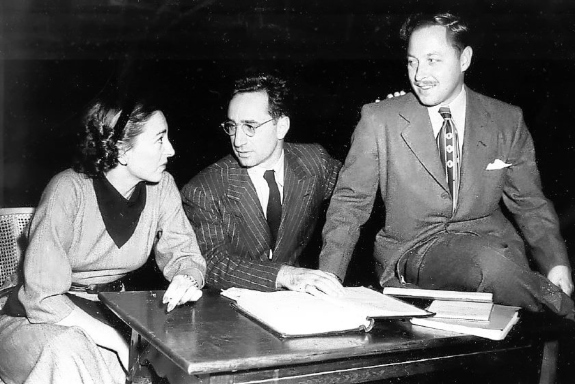
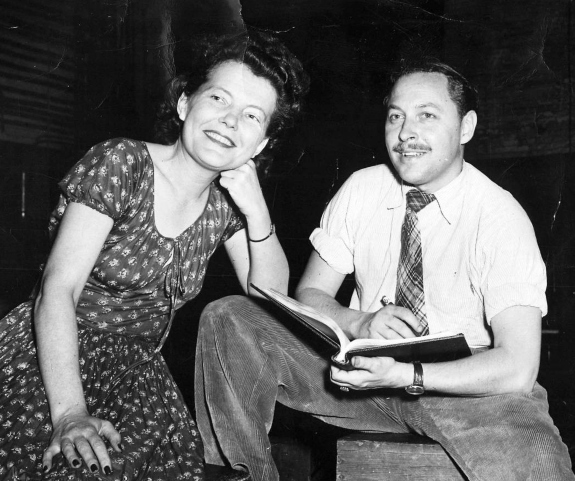
Irene Selznick, Elia Kazan and Tennessee Williams pictured above, and Williams with his good friend Margo Jones below.


Williams had originally recommended three people to Selznick to direct Streetcar: Kazan (his first choice), John Huston and Margo Jones. The latter (whom I had not heard of before) was a stage director and producer, best known for starting the regional theatre movement in the US. Jones was a very close friend of Williams and had co-directed Williams' play The Glass Menagerie on Broadway and also directed/produced another play of his, Summer and Smoke

When the initial negotiations with Kazan failed, Williams felt Jones was a serious candidate to direct Streetcar and asked Selznick to consider the option. Knowing that Selznick was against hiring another female director following the failure of Heartsong, the playwright proposed to co-direct with Jones, emphasising how well they worked together. Williams even went as far as to say that this alternative would even be "preferable" to "Gadge" (Kazan) directing alone. Here is the letter in which Williams put forward his proposal, probably written on 9 May 1947.


Dear Irene:

Just had a talk over phone with Audrey. I am leaving early tomorrow morning for the Cape.

Audrey told me Gadge's terms and I must admit - though I have no idea what directors ordinarily receive -  that these seem pretty stiff.

Irene, I don't think you have yet given sufficient consideration to the idea of direction by myself and Margo Jones. I know and appreciate your aversion to direction by a woman. However this would actually be direction by the author through a woman who is the only one who has a thorough interpretative understanding of his work. Also I think you must have observed how much direction is actually incorporated in the script itself. In writing a play I see each scene, in fact every movement and inflection, as vividly as if it were occurring right in front of me. However I could not direct by myself as I am insufficiently articulate. However with Margo I could. We have a sort of mental short-hand or Morse code, we are so used to each other and each other's work, and with Margo it would be a labor of love. Love cannot be discounted, even in a hardboiled profession, as one of the magic factors in success. I have a profound conviction that the two of us, working on this script, with you and Audrey and Liebling [Wood's husband and business partner] as a supporting team - could do something a little better with the play than any other single director, including Gadge. I felt that all along but pressed for Gadge because I felt at the outset that you were irrevocably prejudiced against another woman-director. Well, there is only one woman director and that's Margo. Regardless of what anyone says, I know she has the stuff - and her shortcomings are exactly what I am able to supply. With her I could also continue to function as a writer, during the rehearsals, but with any other - perhaps even Gadge - I don't think I would be able to achieve much more. I mean we have a way of stimulating each other.

Irene, this is not to be construed as pressure. I just thought - in view of the stiff terms offered by Kazan - that you should know that there is an alternative and it is in fact an alternative which I think is even preferable. Needless to say my direction would be gratuitous and Margo's terms would be negligible compared to the others.

I hope you will think about this. See you next week.

Love, Tennessee.

[Source: The Selected Letters of Tennessee Williams, Vol. 2: 1945-1957, edited by Albert J. Devlin and Nancy M. Tischler (2004)]


I wonder whether Selznick ever seriously considered Williams' proposal. At any rate, negotiations with Kazan resumed and a deal was eventually closed. Although not willing to share authority as producer, Selznick did compromise on the billing: "Irene M. Selznick presents Elia Kazan's Production of A Streetcar Named Desire." In addition she gave twenty percent of the show to Kazan while reducing her own share.

A Streetcar Named Desire opened on Broadway on 3 December 1947. It became a huge success and made an instant star of Marlon Brando. In 1951, Warner Bros. made a successful film adaptation of the play, again directed by Elia Kazan and with Brando, Karl Malden and Kim Hunter reprising their stage roles (Vivien Leigh replaced Jessica Tandy). Irene Selznick went on to produce several plays, including Bell, Book and Candle (1950) and The Chalk Garden (1955). I'm not sure if she ever worked with a female director again. 

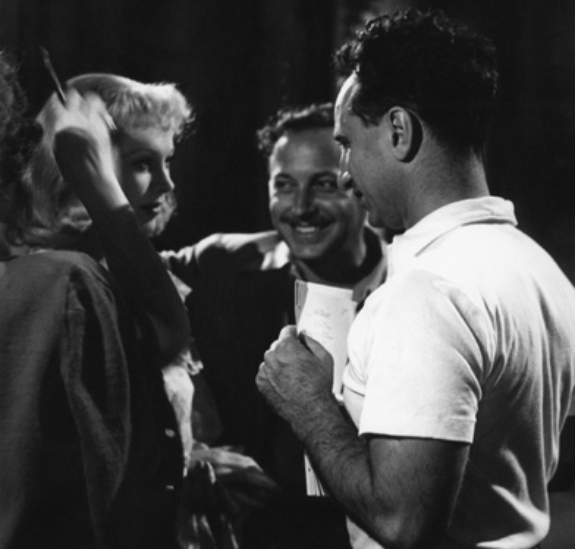
Tennessee Williams and Elia Kazan with Vivien Leigh during production of the film adaptation of A Streetcar Named Desire.

18 January 2022

Now the bitch has all the riches

German novelist Erich Maria Remarque, who is best known for his 1929 bestselling novel All Quiet on the Western Front, had an affair with Marlene Dietrich which started in 1937 and lasted at least three years. Dietrich was married to Rudolf ("Rudi") Sieber —their marriage lasted from 1923 until Sieber's death in 1976— and at the time Remarque was married to his first wife Ilse Jutta Zambona, whom he eventually divorced in 1957. After their affair had ended, Remarque and Dietrich remained close friends, sharing a special bond for the rest of their lives. (They kept up a correspondence and a selection of their letters was published in the 2003 Sag Mir Dass Du Mich Liebst (Tell Me That You Love Me).)

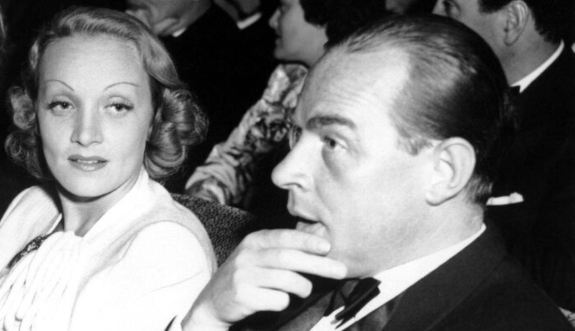
Dietrich and Remarque at a film premiere in 1939


When Dietrich first learned about Remarque being romantically involved with Paulette Goddard, she was shocked and appalled. Dietrich had felt contempt for Goddard ever since the actress had given her advice about men (which happened on a train ride to Hollywood sometime in the 1930s): "The only thing you have to always rememberNever, ever sleep with a man until he gives you a pure white stone of at least ten carats." Goddard not only loved diamonds but she also loved art and antiques, and Dietrich was convinced that when Goddard eventually married Remarque it was because of his money and his massive collection of impressionist paintings. It should be noted, incidentally, that Remarque had first proposed to Dietrich but when she refused he asked Goddard.

Remarque and Goddard tied the knot in 1958. Twelve years her senior, Remarque adored Goddard, loving her carefree attitude to life and her mind. (Writer Anita Loos, a longtime friend of the actress, said that Goddard was one of the most intelligent and most well-read people she knew.) In a marriage that lasted twelve years until Remarque's death in 1970, Goddard brought her husband emotional stability and made him feel the joy of life again. Remarque, in turn, gave his wife what she wanted, her needs mostly materialistic. "I think it was a happy marriage", said actress friend Luise Rainer who saw the couple often. "He could give her a lot of jewellery and that's what she loved. George Gershwin had once told me years before that Paulette was a little gold-digger, and I'm sure she was perfectly aware of Erich's money, his art collection, his beautiful house when she married him ... She was not very enthusiastic about his virility, but she certainly loved him."

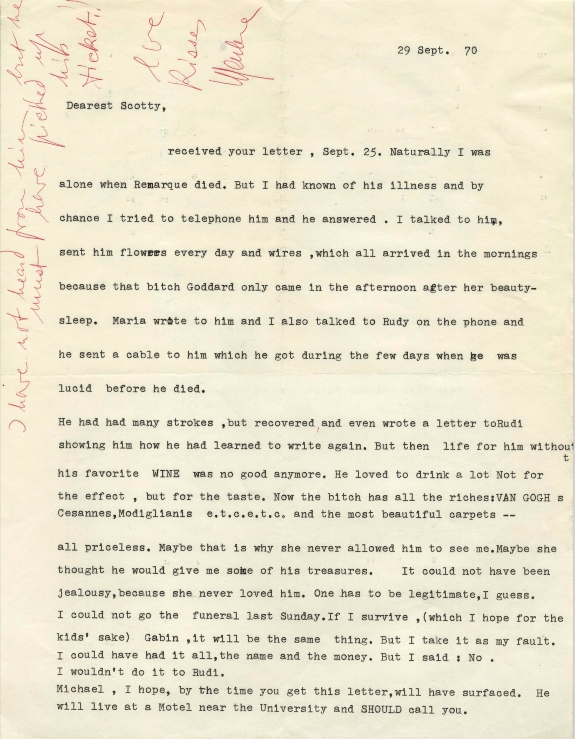
Dietrich was certain, however, that Goddard had never loved Remarque. Four days after Remarque's death  —after many strokes he died of heart failure on 25 September 1970, aged 72— she wrote the following letter to her friend Scotty, among others talking about "that bitch Goddard". 


transcript handwritten part:
I have not heard from him but he must have picked up his ticket!! 
love kisses Marlene

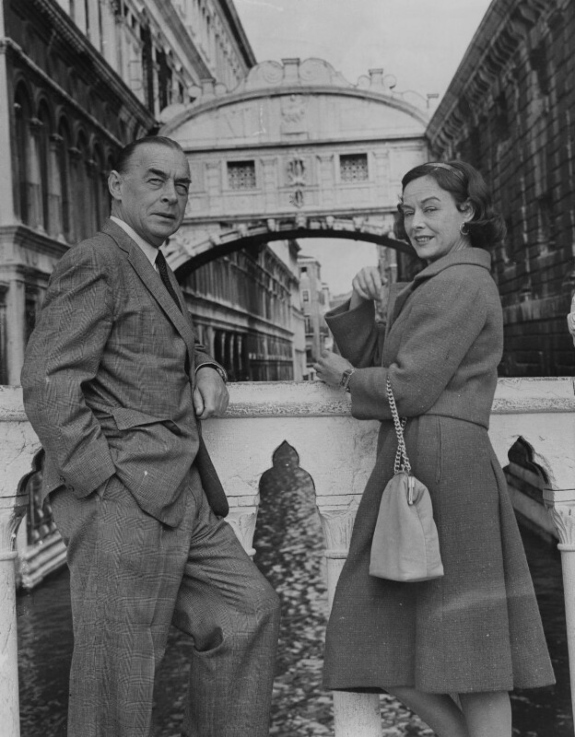
Remarque and Goddard photographed in October 1958
The only picture I could find of Paulette Goddard and Marlene Dietrich together. I don't know when it was taken or what the occasion was but here they are pictured with Mischa Auer (left) and Broderick Crawford.

Following Remarque's death, Goddard gradually sold her husband's collection of impressionist paintings, feeling that "the public should have access to such great paintings" and "tired of having them stored away in crates." A large part of the collection sold for $3 million at auction at Sotheby's in 1979. Remarque's original manuscripts of his work as well as his diaries and personal library were donated by Goddard to the New York University. While the actress may have been a "gold-digger" accumulating a lot of wealth during her lifetime, she also gave back. When she passed away in 1990, Goddard left more than $20 million to the same N.Y.U. for the establishment of scholarships and the development of educational and research programmes. In accordance with Goddard's wishes, in 1995 the N.Y.U. founded The Remarque Institute, in honour of the actress' late husband. 

9 January 2022

Billing Issues on "The Women"

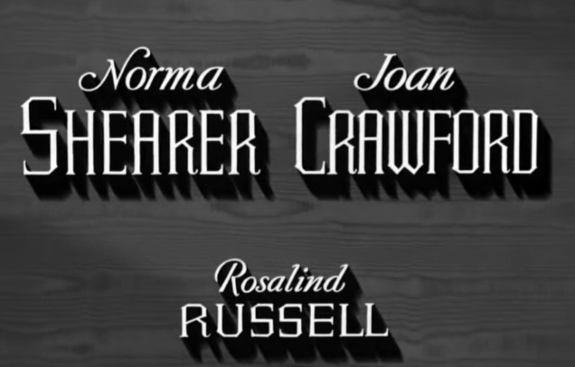
Norma Shearer's MGM contract stipulated that she would not share star billing with any other actress. When George Cukor's The Women went into production in the spring of 1939, Norma's co-star Joan Crawford, however, demanded to be billed above the title alongside Norma. (After being labelled box-office poison the year before, Joan had lobbied hard to be cast as the bitchy Crystal Allen and wouldn't settle for less than co-star billing.) It was MGM boss Louis B. Mayer who eventually asked Norma to chuck the clause in her contract and to give Joan what she wanted. Norma at first objected but under pressure gave in, signing the following amendment on 3 May 1939.

Source: Bonhams
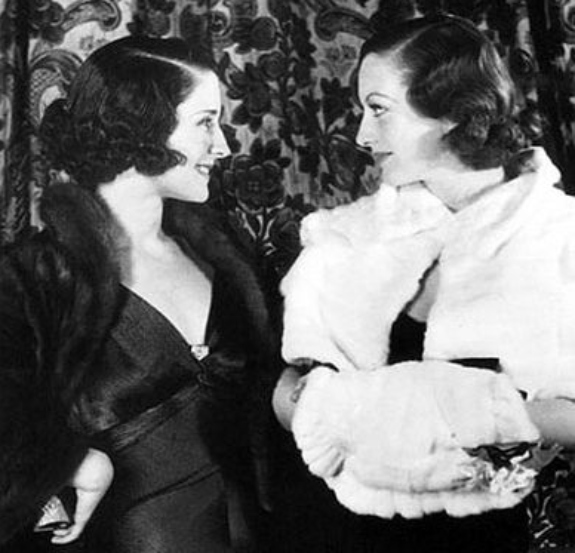
Norma Shearer and Joan Crawford photographed in 1932

Rosalind Russell, whose role in The Women as the gossipy Sylvia Fowler was actually bigger than Joan's, wanted Norma to do the same thing for her but the "Queen of MGM" refused. Adamant to get above-the-title billing with her two co-stars, Rosalind thought of a plan and —encouraged by what Louis B. Mayer had said to her, "I hear you're going to steal this picture"— called in sick about a month into production. Rosalind's plan worked out when on the fourth day of her strike Norma yielded. On 13 June 1939, Norma signed another amendment:

I now agree that both Miss Joan Crawford and Miss Rosalind Russell may be given co-star credit with my name; provided, however, that in no event shall Miss Russell’s name appear in size of type larger than 50% of the size used to display my name.   
The three actresses credited on screen for The Women with Rosalind's name half the size of her co-stars.
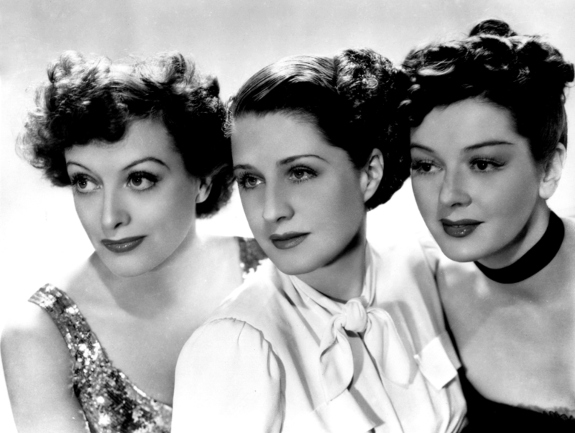
Publicity still for The Women with Joan, Norma and Rosalind. A critical and commercial success, the film was Joan's comeback and turned Rosalind into a big star. For Norma it was one of her last films before she retired from acting in 1942.
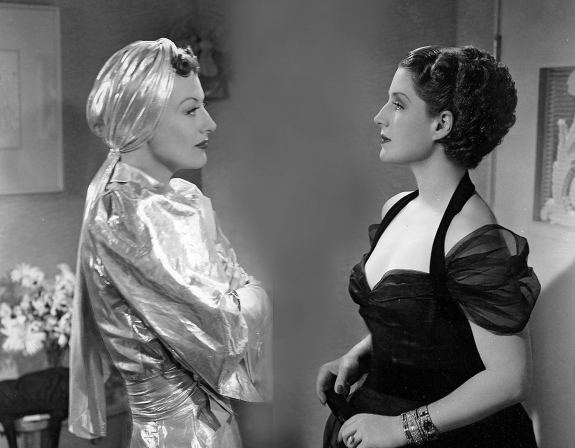
Joan Crawford and Norma Shearer as resp. Crystal Allen and Mary Haines in the big confrontation scene from The Women. While the actresses were hardly friends, the feud between them was exaggerated for publicity purposes. To Hedda Hopper Joan reportedly said: "So many people say Norma and I dislike each other — who are we to disagree with the majority opinion?"

4 January 2022

You must reduce further ...

After being denied membership to the Los Angeles Country Club because he was believed to be Jewish, 20th Century-Fox boss Darryl Zanuck decided to purchase the rights to Laura Hobson's 1947 novel Gentleman's Agreement and adapt it for the screen. Hobson's novel tackles the subject of anti-Semitism, which was a controversial subject at the time. Urged by Samuel Goldwyn and other Jewish film executives not to make the film as it might "stir up trouble", Zanuck went ahead regardless and his decision ultimately paid off. Gentleman's Agreement (1947), starring Gregory Peck, Dorothy McGuire, John Garfield and Celeste Holm, became an unexpected box-office success and at the Academy Awards also took home awards for Best Picture (Darryl Zanuck), Best Director (Eliza Kazan) and Best Supporting Actress (Celeste Holm).

Celeste Holm started her career in the theatre and earned both critical and public praise for her role of Ado Annie in Rodgers and Hammerstein's musical Oklahoma! (1943). Signed to a contract by 20th Century-Fox in 1946, Holm made her screen debut that same year in Three Little Girls in Blue. When Gentleman's Agreement was being cast, Zanuck reportedly didn't want Holm for the part of fashion editor Anne Dettrey but hired her at the insistence of director Kazan. Holm's performance proved to be one of the finest of her career and the only one for which she earned an Oscar (although she would receive further nominations for Come to the Stable (1949) and All About Eve (1950)). Preferring the theatre over film work, Holm made relatively few films during her career. Her other pictures include Road House (1948), The Snake Pit (1948), The Tender Trap (1955) and High Society (1956), the latter two co-starring Frank Sinatra.

Above: Celeste Holm with Gregory Peck in Gentleman's Agreement. About Peck Holm said that he wasn't much fun. Below: At the Oscars with (from left to right) Darryl Zanuck, Edmund Gwenn, Loretta Young, Ronald Colman and Holm.

A few weeks before Gentleman's Agreement went into production, Darryl Zanuck wrote the following letter to Celeste Holm. A hands-on studio boss who involved himself in all aspects of film production, Zanuck was concerned with Holm being too heavy for her role and suggested she'd lose weight. Apart from Zanuck's letter, a draft of Holm's reply to Zanuck is also shown.


Transcript: 

My dear Mr. Zanuck —

Nothing could make me happier than does this assignment in "G.A"!
To this end, nothing would be difficult — and I shall continue
Thank you  So I shall continue my reducing to achieve even lesser proportions [than] those I had in 3 Little G's in Blue.
Sincerely — in appreciation
C

Celeste Holm in a scene from Three Little Girls in Blue, while performing the song Always the Lady.


25 December 2021

Your Christmas card was the most wonderful that I have ever received!

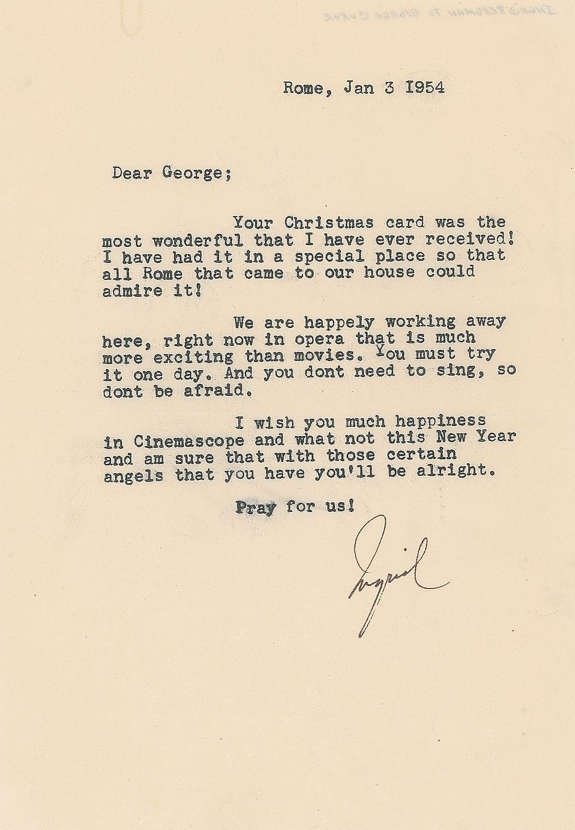
Director George Cukor usually began planning his Christmas cards in the fall. His good friend and fashion photographer George Hoyningen-Huene (who worked as a colour consultant on some of Cukor's films, e.g. the 1954 A Star is Born) would next design the cards, a tradition which lasted until Huene's death in 1968. One of Cukor's most elaborate cards was the 1959 Christmas card, which was a collage of his three dogs, several film projects and events (see here). The 1961 card was much smaller and came in the form of a bookmark, with Cukor's Christmas greeting on one side and facsimile photos of his beloved dogs on the other. (Marilyn Monroe was one of the recipients of the 1961 card (see here).

What Christmas cards Ingrid Bergman and Joan Crawford received from Cukor in resp. 1953 and 1966 I don't know, but judging from their reaction in the following letters the cards must have been special. Bergman, who had worked with Cukor on Gaslight (1944), thanks the director via a letter sent from Rome, Italy. (The opera she refers to in her letter is Joan of Arc at the Stake.) Crawford and Cukor were good friends —they had worked together several times, among others on The Women (1939) and A Woman's Face (1941)— and Joan not only thanks her friend for the card but also for the box of soaps he sent her.

Source: icollector.com

Source: icollector.com
MERRY CHRISTMAS EVERYONE!

20 December 2021

Bette and Joan's Financial Rivalry

By the early 1960s, Bette Davis and Joan Crawford were no longer the big box-office stars they once were. Both in their fifties, the actresses desperately needed a project to revive their declining careers. It was director/producer Robert Aldrich who came to the rescue when he sent Joan a copy of What Ever Happened to Baby Jane?, a 1960 novel by Henry Farrell. For years Joan had asked Aldrich, with whom she had worked on Autumn Leaves (1956)to find a suitable project for her and Bette Davis (Bette and Katharine Hepburn being the actresses she admired most). Joan was very enthusiastic after reading Farrell's story and next asked Bette to co-star with her in the film.

In order to get financing for his project, Aldrich approached every studio in Hollywood but the studio moguls had little faith in the box-office appeal of the two older stars. In the end, independent production company Seven Arts agreed to finance the film and Warner Bros, after being initially reluctant, decided to distribute it. Baby Jane was made on a very modest budget —with production completed in a mere six weeks— and Bette and Joan received salaries that were much lower than their standard fees. Aldrich later recalled: "I offered each actress a percentage of the picture plus some salary. Joan accepted, but Bette's agents held out for more than I could pay". Eventually Joan was paid a salary of $30,000 plus 15% of the net profits while Bette received $60,000 (double of Joan's salary!) and 10% of the profits. Being paid in net profits, Bette compared it to gambling and, as it turned out, Joan proved to be the better gambler. Unexpectedly, Baby Jane became a massive box-office hit and, with her percentage of the profits being higher than Bette's, Joan ultimately earned much more than Bette. (According to Donald Spoto's Possessed: The Life of Joan Crawford (2010), Joan's earnings on Baby Jane amounted to $1,400,000.)

Above: Bette Davis and Joan Crawford in a publicity still for Baby Jane as resp. Baby Jane Hudson and her sister Blanche. From the start Joan had wanted to play the role of the wheelchair-bound sister while she felt Bette would be perfect as the insane Baby Jane. Below: Joan and Bette laughing on the set of Baby Jane. While the women were by no means friends, they reportedly got along during filming despite all gossip to the contrary. It was, however, when Bette received an Oscar nomination for her performance and Joan didn't that things turned unfriendly between them (read more in this post).
Below is the first page of Bette and Joan's contracts for Baby Jane. Under paragraph 3 their salaries are indicated. Joan's contract clearly shows that she was paid $30,000 and not $40,000, as I've seen mentioned in several sources. The film of writer/producer Luther Davis referenced in the second paragraph of Joan's contract was Lady in a Cage (1964); at the time Joan was being considered for the lead role, which eventually went to Olivia de Havilland. 

Source: Heritage Auctions
Above: Bette made sure that in the opening credits of What Ever Happened to Baby Jane? her name came before Joan's.
Source: Heritage Auctions


Concluding this post, here is a fun anecdote. In November 1962 Bette Davis appeared on The Jack Paar Program to promote Baby Jane. Bette told Paar that when she and Joan were first suggested for the leads, the studio moguls said they wouldn't give a dime for "those two old broads" (watch Bette with Jack Paar here). A few days later, Bette received a note from Joan saying: "Please do not continue to refer to me as an old broad. Sincerely, Joan Crawford." 

"Those two old broads"